A spilled drink in a supermarket, an uneven hotel stair, or a patch of ice outside an office can change a person’s life in seconds. One moment, you are walking normally. The next, you may be on the ground with a fractured wrist, injured back, torn knee ligament, or concussion.
What happens after the fall is just as important as what caused it. The dangerous condition may be cleaned or repaired within minutes. Witnesses may leave, security recordings may be overwritten, and the property’s insurance company may begin building its defense before you understand the extent of your injuries.
A slip and fall does not automatically make a property owner responsible. U.S. premises-liability claims usually require evidence that a dangerous condition existed, an owner or another responsible party created it or knew—or reasonably should have known—about it, and the condition caused the injury. Avoiding the following mistakes can protect your health and strengthen your legal position.
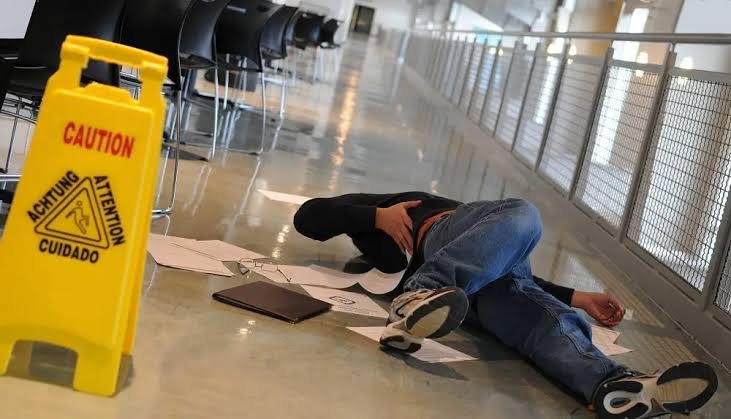
Leaving Without Identifying What Caused the Fall
Shock and embarrassment can make a person want to leave immediately. However, walking away without identifying the hazard may create a serious evidence problem.
Try to determine whether you slipped on water, oil, food, ice, loose flooring, a damaged mat, or another condition. In a trip-and-fall case, identify the crack, raised surface, broken stair, cable, pothole, or object that caught your foot.
Do not guess. Record what you actually observed. A claim becomes much harder when the injured person can only say, “I do not know why I fell.”
Your safety still comes first. Do not attempt to inspect the area when movement could worsen a head, neck, back, or bone injury.
Failing to Report the Accident
Always report the fall to a manager, landlord, property owner, security officer, supervisor, or employee before leaving, when your medical condition permits.
Ask the responsible person to create a written incident report. Request a copy and record the name, job title, and contact details of everyone who receives your report.
Read any statement carefully before signing it. Make sure it accurately describes the location, time, hazard, and affected body parts. Do not sign a blank, incomplete, or misleading form.
When the business refuses to provide a copy, send a written account by email or another trackable method. This creates evidence that the incident was reported promptly.
Taking No Photographs of the Hazard
The condition that caused the fall may disappear quickly. An employee may mop the floor, move a mat, repair a broken step, or place warning cones in the area after the accident.
Take clear photographs and videos showing:
- The exact hazard
- The area surrounding it
- The size, depth, or shape of the defect
- Lighting and visibility
- Warning signs or their absence
- Your injuries
- Your shoes and clothing
- Nearby surveillance cameras
Use both close-up and wide-angle photographs. A close image can show the defect, while a wider view can explain why it was difficult to notice or avoid.
When you cannot take photographs because of your injuries, ask a trustworthy witness, friend, or family member to document the scene.
Ignoring Witnesses and Surveillance Cameras
Independent witnesses can confirm that the floor was wet, a warning sign was missing, or the dangerous condition existed before the accident.
Collect each witness’s name, telephone number, and email address. Do not rely entirely on the property owner to preserve this information.
Look for cameras inside or outside the property. Supermarkets, apartment buildings, hotels, parking garages, offices, and public facilities frequently use surveillance systems. Video may show how the condition developed, how long it remained present, whether inspections occurred, and how you fell.
Record the position of each visible camera. Surveillance footage may be automatically deleted, so a prompt written preservation request may be necessary.
Assuming the Business Is Automatically Liable
An injury on commercial property does not automatically establish negligence. The property owner or operator may argue that the hazard appeared only moments before the fall and that employees had no reasonable opportunity to discover it.
A strong claim may require proof that the responsible party:
- Created the unsafe condition
- Received an earlier complaint
- Saw the hazard but ignored it
- Failed to perform reasonable inspections
- Allowed a recurring problem to continue
- Failed to provide an adequate warning
Cleaning schedules, inspection logs, repair requests, employee communications, earlier complaints, photographs, and video recordings may help establish notice.
Understanding this requirement prevents claimants from relying only on the seriousness of their injuries.
Apologizing or Accepting Blame
People often say, “I should have been more careful,” because they feel embarrassed. An insurer may later treat that casual statement as evidence that the property was safe and the claimant caused the accident.
Do not argue or accuse employees of deliberate misconduct. Simply explain what happened in factual language.
Avoid guessing that you were distracted, walking too quickly, or wearing the wrong shoes. You may not yet know whether lighting, poor maintenance, inadequate warnings, or the property layout contributed to the fall.
Always be truthful, but do not make legal conclusions before the accident has been investigated.
Delaying Medical Treatment
Pain and swelling may not appear immediately. Adrenaline can hide symptoms of concussions, ligament injuries, back trauma, and soft-tissue damage.
Seek medical care promptly when you develop headaches, dizziness, numbness, swelling, restricted movement, severe pain, confusion, or difficulty walking. Tell the healthcare provider when, where, and how the fall occurred.
Delayed treatment may harm your recovery and allow an insurer to argue that the injury was unrelated to the incident.
Follow reasonable medical advice and attend scheduled appointments. Large, unexplained gaps in treatment can also weaken the connection between the fall and your condition.
Minimizing Symptoms to Medical Providers
Some patients say they are “fine” because they do not want to complain. Others mention only the most painful injury and fail to report discomfort in another body part.
Medical providers can treat only the symptoms they know about. Explain all genuine symptoms clearly, including when they began and whether they are improving or worsening.
Do not exaggerate. Inconsistent or unrealistic descriptions can damage credibility. At the same time, do not hide pain, sleep problems, dizziness, reduced movement, or difficulty completing ordinary activities.
Accurate medical records are often central to proving the nature and duration of an injury.
Discarding Shoes, Clothing, or Damaged Belongings
The insurer may argue that worn soles, high heels, loose clothing, or unsuitable footwear caused the fall. Preserve the shoes and clothing worn during the accident.
Place them in a safe location and avoid washing, repairing, or continuing to wear them. Take photographs showing their condition from several angles.
Also preserve any damaged phone, glasses, bag, watch, or other personal property. These items may support the description of the impact and form part of the property-loss claim.
Never alter physical evidence after a legal dispute becomes reasonably likely.
Giving an Unprepared Recorded Statement
A property insurer may contact you shortly after the accident and request a recorded interview. The adjuster may sound friendly, but the company is investigating whether it can deny or reduce the claim.
Do not guess about how long the hazard existed, whether employees knew about it, or when you will recover. Avoid estimates when you do not know the answer.
Be particularly careful with questions about:
- Where you were looking
- Whether you saw the hazard
- Your walking speed
- Mobile phone use
- Previous injuries
- Footwear
- Warning signs
- Current symptoms
A serious injury or disputed claim may justify obtaining legal advice before giving a detailed recorded statement.
Signing a Broad Medical Authorization
An insurer may need records related to the fall, but an unrestricted authorization could provide access to years of unrelated medical history.
The company may search for an earlier back, knee, shoulder, or head condition and argue that your current symptoms existed before the accident.
Read every authorization carefully. Check which healthcare providers, records, and periods it covers. Depending on the claim, relevant records may be supplied directly instead of giving the insurer unlimited access.
A pre-existing condition does not automatically defeat a case. Compensation may still be available when the fall aggravated or accelerated an earlier problem, but medical evidence must separate the old condition from the new harm.
Posting About the Accident Online
Social media content can be misunderstood when viewed without context. A photograph showing you smiling at a birthday celebration does not prove that you are pain-free, but an insurer may still use it to challenge your claim.
Avoid posting details about:
- The accident
- Your symptoms
- Physical activities
- Travel
- Medical treatment
- Settlement discussions
- The property owner or employees
Ask friends and family not to tag you in photographs or posts.
Do not destroy existing content after a claim or lawsuit begins without legal guidance. Deleting material may create a separate evidence issue. A safer approach is to limit future posting and review privacy settings.
Accepting a Quick Settlement
A fast settlement may appear helpful when medical bills are accumulating and you are unable to work. However, early offers often arrive before the diagnosis and future treatment needs are clear.
Before settling, determine whether you may need:
- Surgery
- Extended physical therapy
- Future diagnostic testing
- Mobility equipment
- Time away from work
- Permanent work restrictions
- Household assistance
Accepting a settlement normally requires signing a release. Once signed, the release generally ends the claim permanently, even when symptoms become worse later.
Confirm that the offer includes medical expenses, lost income, future losses, pain and suffering, and any other compensation available under state law.
Failing to Document Financial Losses
An insurer will not automatically calculate every cost created by the accident. Keep an organized file containing:
- Medical bills
- Prescription receipts
- Therapy expenses
- Transportation and parking costs
- Medical equipment purchases
- Wage statements
- Employer letters
- Tax or business records
- Household-help expenses
Self-employed people may need invoices, contracts, appointments, client communications, and historical earnings records to prove lost income.
Maintain a brief daily journal describing pain, sleep disruption, mobility problems, missed activities, and assistance required from family members. Specific examples are usually more useful than general statements that the injury “changed everything.”
Identifying the Wrong Responsible Party
The property owner may not be the only party responsible for the hazard. Control of the accident area may belong to a tenant, landlord, property manager, cleaning company, maintenance provider, snow-removal contractor, construction business, or government agency.
Contracts and leases may determine who was responsible for inspections, cleaning, repairs, and warnings.
Government-property accidents require special attention. Claims involving public sidewalks, transit stations, schools, or government buildings may have notice requirements that expire much sooner than the ordinary personal injury filing deadline.
Identifying every responsible party can also reveal additional insurance coverage.
Waiting Too Long to Take Legal Action
Every state limits the time available to file a premises-liability lawsuit. Different periods may apply to adults, children, wrongful death claims, public property, and government agencies.
Insurance negotiations do not necessarily pause the legal deadline. An adjuster may continue requesting records while the filing period runs.
Prompt action also protects evidence. Employees leave their jobs, memories fade, surveillance footage is erased, inspection logs are discarded, and the property may be repaired.
Serious injuries, disputed notice, government property, multiple defendants, or approaching deadlines are strong reasons to obtain legal advice early.
Frequently Asked Questions
Q1. What should I do if employees clean the hazard before I photograph it?
Photograph the cleaned area, cleaning equipment, warning signs, employees involved, and the surrounding location. Collect witness information and immediately request preservation of surveillance footage, inspection logs, and the incident report.
Q2. Can I make a claim when no warning sign was present?
Possibly. The absence of a warning may support the claim, but you must still establish that a dangerous condition existed and that the responsible party created it or had sufficient notice to correct or warn about it.
Q3. Will unsuitable shoes automatically defeat my case?
No. Footwear may be considered when fault is evaluated, but it is only one part of the evidence. The condition of the property, visibility of the hazard, warnings, lighting, and maintenance practices can also be important.
Q4. Is a lawyer necessary for every slip-and-fall claim?
No. A minor claim with clear evidence and limited expenses may sometimes be handled directly. Legal assistance becomes more valuable when injuries are serious, responsibility is disputed, video must be preserved, several parties control the property, or the accident involves a government entity.