A grease fire flares up in a restaurant kitchen. A phone battery overheats in someone’s pocket. A landlord ignores faulty wiring for months until it finally sparks. Burns happen in an instant, but the recovery, both physical and legal, can stretch on for years. Skin grafts, repeated surgeries, permanent scarring, and psychological trauma often follow victims long after the initial injury has technically “healed,” and most people have no idea what their legal rights actually look like when someone else’s negligence caused it all.
Burn injuries occupy a genuinely unique space in personal injury law, partly because the medical severity scale directly shapes legal strategy in a way few other injuries do. Understanding how burns get classified, who can be held responsible, and what actually drives compensation can make the difference between a settlement that reflects a lifetime of reconstructive care and one that falls drastically short.
Understanding the Four Degrees of Burn Severity
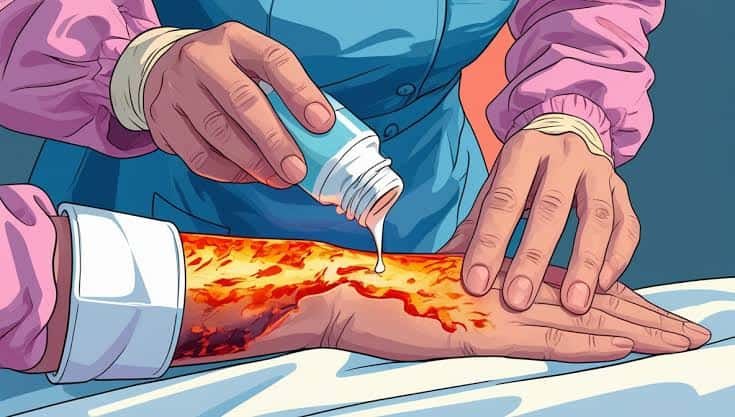
Burns get classified into four degrees based on how deep the tissue damage goes, and this classification directly shapes both medical treatment and legal strategy. First-degree burns affect only the outer skin layer, comparable to a bad sunburn, causing redness and mild pain without blistering. These typically heal quickly and rarely lead to significant legal action, since damages tend to be minimal.
Second-degree burns reach deeper into the skin, causing blistering and considerably more intense pain. Third-degree burns destroy both skin layers entirely, often requiring skin grafting and leaving permanent scarring. Fourth-degree burns penetrate all the way into muscle and bone, are immediately life-threatening, and frequently require amputation when they affect limbs or extremities.
The Common Causes That Lead to Legal Claims
Thermal burns from house fires, vehicle fires, or industrial explosions are among the most litigated, particularly when faulty wiring, a defective appliance, or a landlord’s failure to maintain smoke detectors contributed to the fire. Chemical burns occur when skin contacts corrosive substances, and improper storage, labeling, or handling by an employer or property owner can create liability in these situations.
Electrical burns deserve particular attention because they’re genuinely deceptive; they can appear relatively minor on the skin’s surface while causing severe internal tissue destruction along the current’s path through the body. Radiation burns, medical burns from improperly used surgical equipment or medication errors, and burns from vehicle fires round out the remaining major categories that regularly result in legal claims.
Who Can Actually Be Held Responsible
Liability for a burn injury depends heavily on the specific circumstances surrounding how it happened. Employers can be held responsible when workplace safety failures, like inadequate training or missing protective equipment, lead to a burn injury. Property owners face liability when unsafe conditions on their premises, such as faulty wiring or unmaintained heating systems, cause a fire or burn.
Manufacturers and distributors can be held liable when a defective product, like a faulty appliance, an overheating battery, or dangerously flammable clothing, causes a burn injury. Motorists can be held responsible when burns result from a vehicle fire caused by their negligent driving, and government entities can sometimes be pursued when burns result from negligently maintained public infrastructure.
Proving Your Case: What You Actually Need to Show
Most burn injury claims rest on standard negligence principles, meaning you need to show the responsible party owed you a duty of care, breached that duty through negligent action or inaction, and that this breach directly caused your burn injury. A manufacturer has a duty to produce safe products, a property owner has a duty to maintain reasonably safe conditions, and an employer has a duty to provide adequate workplace safety measures.
In cases specifically involving defective products, you may be able to rely on strict liability instead, meaning you don’t need to prove the manufacturer was careless, only that the product was defective when it left their control and that this defect directly caused your burn.
Why Workplace Burns Often Involve Two Separate Paths
Burn injuries sustained on the job are typically addressed first through workers’ compensation, which provides benefits regardless of fault but generally shields employers from separate lawsuits. That said, if a third party outside your employer, like an equipment manufacturer or a subcontractor, contributed to the burn, you may still be able to pursue a separate personal injury lawsuit against that party alongside your workers’ compensation benefits.
This distinction matters enormously because a third-party lawsuit can recover a much broader range of damages, including pain and suffering and full lost earning capacity, than workers’ compensation typically allows on its own.
What Actually Drives Compensation Higher
Beyond the degree of the burn itself, several factors significantly affect settlement value. The total body surface area affected matters considerably, since larger burns require more extensive treatment and cause greater long-term impact. Location on the body plays a major role too; facial and neck burns consistently result in meaningfully higher settlements than equivalent burns elsewhere, reflecting the profound psychological impact and social challenges victims face with visible disfigurement.
Permanent scarring represents one of the most significant categories of non-economic damages in these cases. Younger victims with permanent scarring or disfigurement generally receive higher compensation too, simply because they’ll live with the physical and psychological impact for a considerably longer portion of their lives.
Why Child Burn Victims Often Receive Substantially Higher Settlements
Children are disproportionately affected by serious burn injuries, largely due to their curiosity, thinner skin, and inability to escape dangerous situations quickly. Child burn cases involve the same underlying liability theories as adult cases, but they frequently produce meaningfully higher damages because of the extended projected lifespan the child will carry the injury, along with the profound impact on development, psychological health, and future opportunities.
A child’s case also often requires projecting the cost of repeated reconstructive surgeries as they physically grow over time, since scar tissue doesn’t expand the same way healthy skin does, meaning additional procedures are frequently needed throughout childhood and adolescence.
Understanding Insurance Policy Limits and Multiple Defendants
Given how expensive burn treatment can be, identifying every potentially liable party and every layer of available insurance coverage becomes a critical first step in any serious burn case. A burn caused by a defective consumer product implicates the manufacturer’s product liability coverage, which can run into the tens of millions for large companies. A burn in a commercial establishment typically implicates that business’s general liability policy.
If a defective product caused a fire in a negligently maintained building, you may have separate claims against the product manufacturer, the property owner, and potentially other parties as well, each with their own layer of insurance coverage that can contribute to your total recovery.
How Comparative Fault Can Affect Your Final Compensation
If your own actions contributed to the burn, perhaps by ignoring a clear warning sign or misusing a product, most states will reduce your compensation by your assigned percentage of fault rather than eliminating your claim entirely. Some states set a threshold, commonly 50 or 51 percent, beyond which you can’t recover anything at all, while a small number of states bar recovery entirely if you’re found even slightly at fault.
Given how expensive burn treatment tends to be, even a modest shift in your assigned fault percentage can translate into a substantial difference in your final compensation, which is exactly why strong evidence establishing the other party’s negligence matters so much.
The Role of Expert Testimony in Burn Cases
Expert testimony is often the single most important factor in securing fair compensation for a serious burn injury. It’s not enough to simply show the severity of your burns; you need to demonstrate the long-term impact these injuries will have on your life going forward. Fire investigators, electrical engineers, and chemical engineers often establish exactly how the burn occurred and link it directly to the defendant’s negligence.
Medical experts, including burn specialists and psychologists familiar with trauma from disfigurement, help establish both the physical prognosis and psychological impact of the injury, since burn-related PTSD, depression, and social withdrawal represent genuine, compensable damages beyond the physical scarring itself.
Understanding Filing Deadlines for Burn Injury Claims
Every state imposes its own statute of limitations for personal injury claims, generally falling between one and a few years from the date of injury, though this varies considerably depending on your state. If a government entity is involved, such as a burn resulting from negligently maintained public property, a much shorter notice deadline often applies, sometimes just a few months, well before the standard filing deadline would otherwise expire.
Missing either deadline generally bars your right to recovery entirely, regardless of how severe your burn injury is or how clearly the other party’s negligence caused it.
FAQs
Q1. Is it worth pursuing legal action for a relatively minor first-degree burn?
Generally, first-degree burns heal quickly and don’t typically result in significant compensation, since damages tend to be minimal. That said, if the burn resulted from clear negligence and caused any measurable medical costs or lost work time, it’s still worth a brief consultation to confirm whether pursuing a claim makes sense for your specific situation.
Q2. Can I sue for a burn injury that happened at work, or does workers’ compensation cover everything
Workers’ compensation typically becomes your primary avenue against your own employer, without needing to prove negligence, but it doesn’t cover pain and suffering and often limits your total recovery. If a third party outside your employer, like a product manufacturer or contractor, contributed to your burn, you may be able to pursue a separate personal injury lawsuit alongside your workers’ compensation benefits for potentially much greater compensation.
Q3. Why do burn injuries to the face or neck typically result in higher settlements than burns elsewhere on the body?
Facial and neck burns carry a considerably greater psychological and social impact due to visible disfigurement, which courts and insurers recognize as a significant non-economic harm. Settlement data consistently shows these cases resulting in notably higher compensation compared to equivalent burns on less visible parts of the body.
Q4. What if the exact cause of my burn injury isn’t immediately clear, like an electrical burn that seemed minor at first?
Electrical burns specifically can appear far less severe on the surface than the actual internal damage, which is exactly why prompt, thorough medical evaluation matters so much. Fire investigators and electrical engineers can often help establish the true cause and extent of the injury even when it wasn’t immediately obvious, so it’s worth having your case evaluated by an attorney rather than assuming a seemingly minor burn isn’t worth pursuing.