A driver from Texas travels to New York, rents a car, and gets hit at an intersection. The crash itself lasts only a few seconds, but the legal questions begin immediately. Which state’s insurance rules apply? Who pays the first medical bill? Can the injured driver sue? What happens if both drivers made mistakes?
Unlike countries where road accident claims are largely governed by one national legal system, the United States gives individual states substantial authority over motor vehicle insurance and personal injury law. As a result, the legal outcome of a similar accident may be different depending on whether it happened in California, Florida, Texas, New York, or another jurisdiction.
State law can affect how fault is calculated, which insurer pays first, how much compensation is available, and how long an injured person has to take legal action. Understanding these differences is especially important for tourists, international students, new immigrants, interstate drivers, and anyone injured outside their home state.
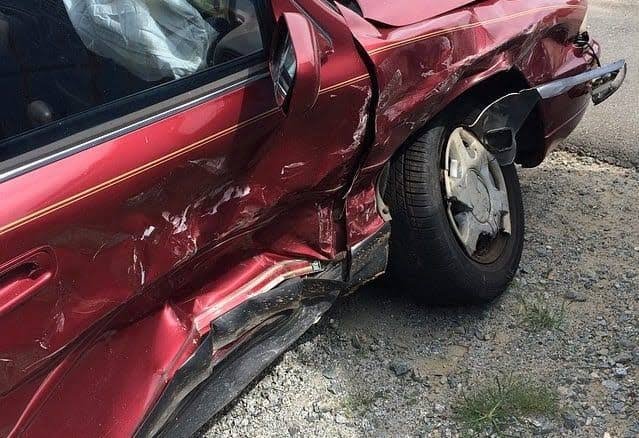
Why the State Where the Accident Happened Matters
The law of the state where the collision occurred usually plays a major role in the claim. It may control:
- How responsibility is divided between drivers
- Whether no-fault insurance benefits apply
- The minimum insurance drivers must carry
- Which damages an injured person can recover
- The deadline for filing a lawsuit
- Whether seat-belt nonuse affects compensation
- Rules for claims against government agencies
- Requirements for reporting the accident
The state where the vehicle is registered and the insurance policy was issued can also matter. This creates additional questions when a driver crosses state lines.
For example, a person may own and insure a vehicle in Pennsylvania but become involved in a collision while visiting New Jersey. The insurer may need to examine the policy language together with the laws of both states.
Fault-Based and No-Fault State Systems
One of the biggest differences between state laws is how injury claims are initially handled.
Fault-based states
In a fault-based state, the driver who caused the accident is generally responsible for the resulting losses. An injured person may submit a bodily injury claim to the responsible driver’s liability insurer.
The insurer investigates the crash before accepting responsibility. It may review police reports, witness accounts, photographs, traffic laws, vehicle damage, and electronic evidence.
The injured person may seek compensation for medical expenses, lost income, pain and suffering, and other eligible losses.
No-fault states
Certain states use a no-fault insurance system. In these jurisdictions, an injured driver generally begins by seeking specified benefits through their own personal injury protection coverage, commonly called PIP.
PIP may cover some medical expenses, lost income, and necessary services without requiring the policyholder to prove that another driver caused the crash.
No-fault does not mean that careless drivers are never responsible. It changes the first source of payment for certain injury-related losses. A person may still be allowed to sue the responsible driver if the injury meets the state’s legal threshold, such as a serious or permanent injury.
No-fault rules generally do not eliminate disputes over property damage.
How States Handle Shared Responsibility
Many car accidents are not entirely one person’s fault. One driver may change lanes carelessly while the other is driving too fast. State negligence law determines what happens when both people contributed to the collision.
Pure comparative negligence
Under a pure comparative negligence system, an injured person may generally recover compensation even when primarily responsible for the accident. The payment is reduced according to the person’s percentage of fault.
If the claimant has $100,000 in damages and is found 40% responsible, the recovery may be reduced to $60,000.
Modified comparative negligence
Many states follow modified comparative negligence. A person can recover only when their share of responsibility remains below a specified level.
Some states use a 50% bar, while others use a 51% bar. This small difference can completely change the result of a close case.
Contributory negligence
A limited number of jurisdictions continue to apply contributory negligence. Under this strict rule, an injured person who contributed to the accident may be prevented from recovering compensation, even when the other driver was much more responsible.
Because the consequences can be severe, drivers should never assume that admitting “a little fault” is harmless.
Minimum Auto Insurance Requirements Differ
Almost every state requires drivers to demonstrate financial responsibility, usually by carrying liability insurance. However, the minimum limits are not uniform.
A policy commonly expresses liability limits through three numbers. These represent:
- Bodily injury coverage for one person
- Bodily injury coverage for one accident
- Property damage coverage for one accident
State minimums should not be confused with adequate protection. A legally valid minimum policy may be too small to cover a serious collision involving surgery, permanent disability, multiple injured passengers, or an expensive vehicle.
Requirements can also change. California, for example, increased its standard minimum liability limits in 2025. Drivers should check current rules whenever they buy, renew, or move an insurance policy to another state.
Uninsured and Underinsured Motorist Laws
Uninsured motorist coverage can protect someone who is injured by a driver without liability insurance. It may also apply in certain hit-and-run accidents.
Underinsured motorist coverage becomes important when the responsible driver has insurance, but the policy limit is smaller than the injured person’s losses.
States treat these protections differently. Depending on the jurisdiction:
- The coverage may be mandatory
- The insurer may be required to offer it
- The policyholder may reject it in writing
- Coverage may apply only to bodily injury
- Property damage may require separate protection
- Special notice and consent rules may apply
A driver should review the declarations page of the policy instead of assuming uninsured and underinsured motorist benefits are automatically included.
Accident Reporting Requirements
Calling the police and filing a formal state report are not always the same thing.
A state may require a driver to report an accident when it causes:
- An injury
- A death
- Property damage exceeding a specified amount
- Damage that prevents a vehicle from being driven
- A collision involving an uninsured driver
The report may need to be submitted to a police department, highway patrol, motor vehicle agency, or another authority. Deadlines may be measured in hours or days.
Failing to submit a required report can create licensing, insurance, or legal problems. Drivers should ask the responding officer whether any separate state form is required.
Statutes of Limitations Are State-Specific
Every state sets deadlines for filing car accident lawsuits. These are called statutes of limitations.
Different deadlines may apply to:
- Personal injury claims
- Vehicle and property damage
- Wrongful death cases
- Claims involving children
- Uninsured motorist disputes
- Claims against state or local governments
The deadline is not always calculated in the same way. A wrongful death period may begin on the date of death, which could be different from the accident date. Special rules may apply when an injured person is a minor or lacks legal capacity.
Insurance negotiations generally do not guarantee that a filing deadline will be extended. An adjuster can continue discussing settlement while the statute of limitations approaches. Once the period expires, the insurer may have a complete defence against a lawsuit.
State Rules Affect the Damages You Can Recover
An injured person may seek both economic and non-economic damages, but state law controls what is available.
Economic damages can include:
- Medical bills
- Future medical care
- Lost wages
- Reduced earning ability
- Rehabilitation costs
- Vehicle damage
- Necessary household assistance
Non-economic damages may include physical pain, emotional distress, permanent limitations, disfigurement, and reduced enjoyment of life.
Some states restrict non-economic damages in particular types of cases. No-fault states may require the victim to satisfy an injury threshold before claiming pain and suffering from the responsible driver.
Punitive damages may be available when conduct is especially dangerous, such as certain cases involving intoxicated driving or deliberate misconduct. States may impose a higher proof requirement, a monetary cap, or procedural restrictions on these damages.
Seat-Belt Laws Can Influence Compensation
Every state has laws addressing seat-belt use, but the legal effect of not wearing one varies.
Failure to use a seat belt does not usually mean that the person caused the accident. A driver who runs a red light cannot escape responsibility merely because the injured person was unbelted.
However, some jurisdictions allow the defence to argue that seat-belt use would have prevented or reduced particular injuries. When permitted, this argument may lower compensation.
Other states restrict or prohibit the use of seat-belt evidence in a civil injury claim. The outcome depends on the law where the case is brought.
Claims Against Government Agencies Follow Special Rules
An accident involving a police car, public bus, sanitation truck, state vehicle, or dangerously maintained public road may create a claim against a government body.
These cases do not always follow ordinary personal injury procedures. The injured person may have to submit a formal notice containing specific information before filing a lawsuit.
The notice period may be much shorter than the normal statute of limitations. It may also require delivery to a particular office or government official.
Missing the notice deadline can defeat the claim even when there is strong evidence of negligence. Immediate investigation is therefore important when a public employee, vehicle, traffic signal, road defect, or government agency may be involved.
Rideshare and Commercial Vehicle Laws
Accidents involving rideshare, delivery, and commercial vehicles may involve several layers of insurance.
For a rideshare driver, available coverage may depend on whether the driver was:
- Offline
- Logged into the application
- Waiting for a ride request
- Travelling to collect a passenger
- Transporting a passenger
State law may establish insurance requirements for each operating period.
A commercial vehicle accident may involve the driver, employer, vehicle owner, maintenance company, cargo loader, broker, or manufacturer. Federal safety rules can also apply to interstate commercial carriers, but state negligence and insurance laws still affect the civil claim.
Dram Shop Laws and Alcohol-Related Crashes
A drunk driver may be responsible for injuries caused by a collision. In some states, a bar, restaurant, liquor store, or social host may also face liability for providing alcohol under prohibited circumstances.
These laws are commonly called dram shop laws. They differ widely.
Liability may depend on whether alcohol was served to a visibly intoxicated person or a minor. Some states provide broad claims, while others impose strict limits or do not allow particular claims against social hosts.
Evidence such as receipts, surveillance video, witness statements, and payment records should be preserved quickly in a suspected alcohol-related crash.
What Out-of-State Drivers Should Do
An out-of-state driver should take the same immediate steps as a local resident:
- Call for medical and police assistance when needed.
- Exchange complete insurance and vehicle information.
- Photograph the scene and collect witness details.
- Notify the insurer promptly.
- Obtain the police report.
- Check the reporting and lawsuit deadlines of the accident state.
Do not assume the law of your home state will control the claim. A lawyer may need to examine the accident location, insurance policy, residence of the parties, vehicle registration, and available court jurisdiction.
Frequently Asked Questions
Q1. Which state’s law applies if I live in one state but crash in another?
The law of the accident state often controls major liability issues, but the policy’s home state may affect insurance coverage. Courts use state-specific conflict-of-law rules when more than one jurisdiction is connected to the case.
Q2. Can my insurance cover me when I drive into another state?
Most standard policies provide coverage across the United States and may adjust to satisfy another state’s minimum requirements. The exact protection depends on the policy, excluded drivers, vehicle use, and territory provisions.
Q3. Does no-fault insurance pay for vehicle repairs?
No-fault or PIP coverage mainly addresses specified injury-related economic losses. Vehicle damage is generally handled through collision coverage or a property damage claim against the responsible driver.
Q4. Can I move to another country while my U.S. accident claim is pending?
Yes, but leaving may make medical documentation, depositions, examinations, communication, and court appearances more complicated. Preserve all records and discuss future availability with the insurer or attorney before relocating.